
Is the GPL for WordPress Legal? A Clear Explanation for Freelancers and Website Owners
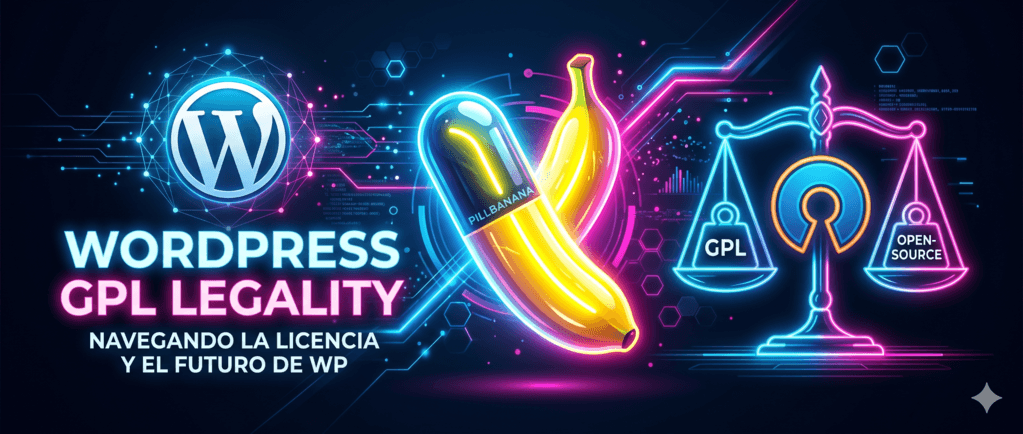
The short answer is: Yes, the GPL license is legal and allows you to copy, modify, and redistribute software under its terms.. But that short answer often creates more confusion than clarity, especially in WordPress, where free plugins, premium plugins, support licenses, activations, trademarks, third-party files, and GPL marketplaces all coexist.
This article explains the issue in plain terms: what the GPL allows, why WordPress is so closely tied to that license, what it means for plugins and themes, and what practical limitations you should be aware of before installing any product on a live site.
- What Is the GPL?
- Why WordPress Uses the GPL
- So, can I use premium GPL plugins without buying them from the original author?
- GPL does not diminish the value of the original developer
- Why Do GPL Marketplaces Exist?
- What Limits You Need to Be Clear About
- How to Decide Whether to Use a GPL Product
- Conclusion
What Is the GPL?
GPL stands for General Public License. It is a free software license created to protect four basic freedoms: the freedom to use the software, to study how it works, to modify it, and to share copies.
An important point: in free software, "free" does not necessarily mean "free of charge." It means freedom to use and redistribute. That is why a GPL-licensed product can be sold, resold, or distributed at no cost, as long as the terms of the license are respected.
The Free Software Foundation itself, which is responsible for the GPL, explains that the license allows you to distribute copies of free software and charge for them if you wish. This idea surprises many people, but it is key to understanding the WordPress ecosystem.
Why WordPress Uses the GPL
WordPress is licensed under the GPL. This affects its entire ecosystem because plugins and themes interact directly with WordPress and, in many cases, are considered derivative works or extensions of the software.
WordPress.org explains that derivatives of the WordPress code are subject to the GPL. It also recommends that plugins clearly state their license, and in its developer handbook, it notes that most WordPress plugins are released under the GPL or compatible licenses.
In practice, this means that a large part of the WordPress ecosystem is built on a culture of freedom, reuse, and distribution. That culture is one of the reasons WordPress has grown so much: thousands of developers have been able to build on an open platform.
From the perspective of the GPL license, if you receive a valid copy of GPL software, you generally have the right to use, copy, modify, and redistribute it under the same license.
But there are some important nuances:
- The GPL covers code licensed under the GPL, but not necessarily trademarks, logos, support, SaaS accounts, API keys, or third-party services.
- Some products may include assets, libraries, or elements with different licenses.
- Purchasing directly from the original author may provide you with official support, automatic updates, private documentation, cloud templates, connected services, or a commercial warranty.
- A GPL-licensed file may be legal, but that does not automatically mean it is secure, up-to-date, or suitable for production.
That is why it is best to distinguish between three questions:
- Legality: Does the license allow redistribution?
- Safety: Is the file clean and free of malicious modifications?
- Convenience: Does this case require official support, automatic updates, or warranties?
Many discussions confuse these three things. That's where misunderstandings arise.
GPL does not diminish the value of the original developer
A common misconception is: "If it's GPL, then there's no point in paying." That conclusion is too simplistic.
When you buy from the original developer, you're not just paying for the file. You may also be paying for support, automatic updates, licenses for connected services, documentation, account access, guaranteed compatibility, and project continuity.
In many cases, paying the original author is the best course of action, especially if:
- The site generates significant revenue.
- The customer needs formal support.
- The plugin handles payments, security, memberships, or sensitive data.
- Access to cloud integrations or proprietary APIs is required.
- The team has no experience reviewing files or resolving conflicts.
The GPL allows redistribution, but it does not require the original developer to provide you with support if you did not purchase the software from him.
Why Do GPL Marketplaces Exist?
GPL marketplaces exist because the license allows software to be redistributed under certain conditions. Their business model is usually simple: affordable access to plugin, theme, and extension files that are already licensed under the GPL.
The value of a legitimate GPL marketplace should not be "circumventing the law" or "piracy." It should be:
- Keep your catalog organized.
- Verify files.
- Update versions.
- Reduce costs for freelancers or small agencies.
- Clearly explain what is included and what is not included.
- Distinguish between GPL software and modified, cracked, or infected software.
Transparency is key. If a GPL provider promises "official support from the author" without having any connection to the author, or if it hides the fact that it does not include official licenses, that's a red flag.
What Limits You Need to Be Clear About
Although the GPL allows redistribution, that does not mean that everything is permitted in every context.
You shouldn't:
- Using third-party brands in a way that makes it appear as though there is an official affiliation when none exists.
- Promise support from the original developer if you don't have it.
- Distribute modified files without notice.
- Removing copyright or license notices when they should be retained.
- Mixing products with incompatible licenses.
- Installing files of dubious origin on client sites without review.
And, above all, you shouldn't confuse GPL with nulled. A clean GPL plugin redistributed under license is not the same as a cracked plugin that has been altered to bypass licenses or infected with malware.
How to Decide Whether to Use a GPL Product
Before using a GPL plugin or theme, ask yourself these questions:
- Do I know where the file came from?
- Does the provider clearly explain its model?
- Is the product up to date?
- Do I need support from the original author?
- Does the plugin handle payments, users, security, or critical data?
- Should I install it in production or just in testing/staging?
- Do I have backups and a test environment?
- Can I scan and verify the file?
If the answer to several of these questions is "no," do not install it yet.
Conclusion
Yes: GPL WordPress is legal as long as the license is respected. The GPL allows you to use, copy, modify, and redistribute software under its terms, even for commercial purposes.
But legal doesn't automatically mean safe, convenient, or sufficient. To work effectively with WordPress, you need to understand the difference between GPL code, official support, activation licenses, third-party services, trademarks, and file security.
The best decision isn't always the cheapest, nor is it always the most expensive. The best decision is the one that takes the context into account: site risk, budget, support needs, and technical capabilities.
Si quieres conocer otros artículos parecidos a ¿GPL WordPress es legal? La explicación clara para freelancers y dueños de sitios puedes visitar la categoría Opinión.
 Español Español
 English
 Português do Brasil
Leave a Reply